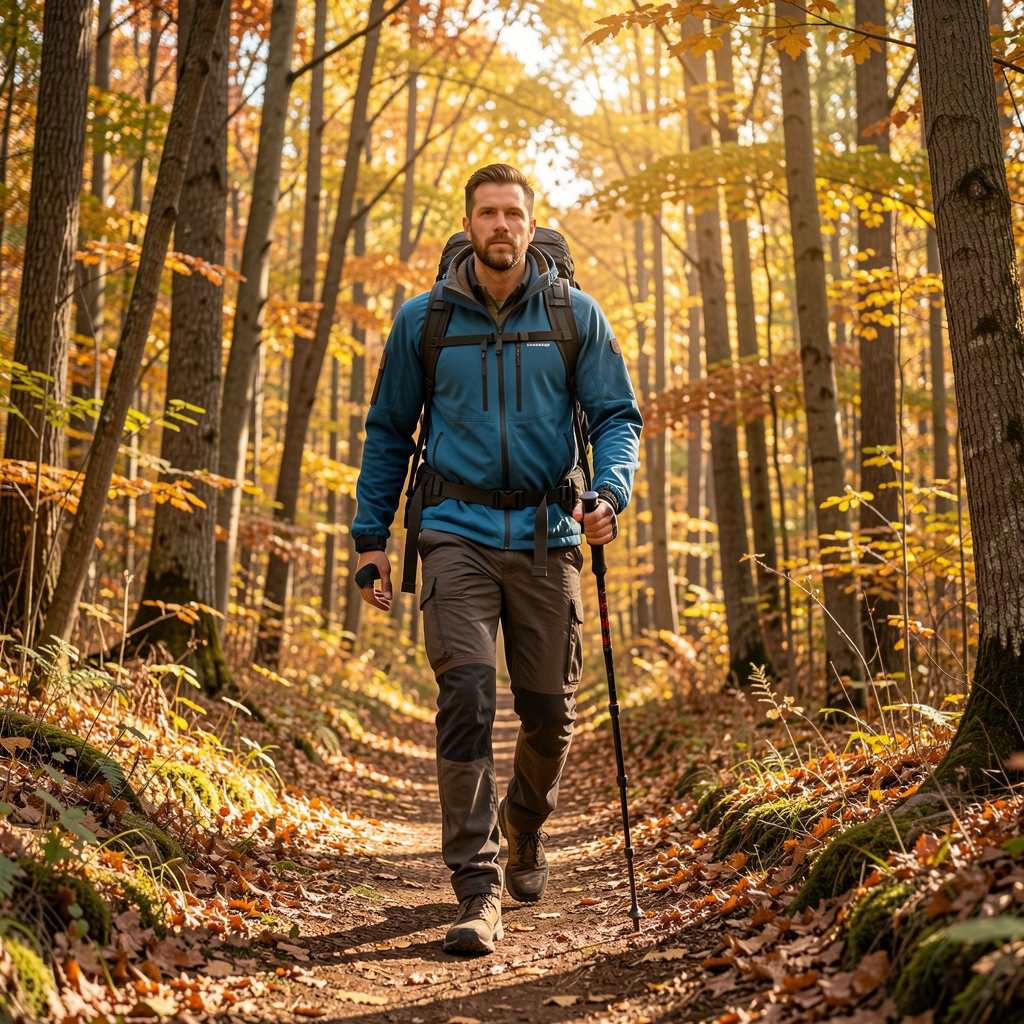
The distinction between active recovery and rest has become increasingly precise in the sport science literature. Active recovery — low-intensity movement performed in the twenty-four to forty-eight hours following a high-intensity training session — has a documented effect on the clearance of metabolic byproducts, the maintenance of joint mobility, and the reduction of perceived muscle soreness ratings. For men with five-day working schedules and structured training programmes, the weekend is the primary window for this type of movement, and its management has a measurable bearing on the quality of the following week's training.
The Physiology of Low-Intensity Outdoor Movement
Low-intensity steady-state activity — walking, cycling at conversational pace, hiking on varied terrain — operates within a heart rate zone that promotes parasympathetic nervous system activation. This is the physiological state opposite to the fight-or-flight response associated with high-intensity training and occupational stress. In the parasympathetic state, blood flow to the digestive system increases, cortisol levels decrease, and the cellular processes associated with tissue repair and glycogen resynthesis operate most efficiently.
Outdoor environments add a variable not easily replicated in gym-based recovery protocols: exposure to natural light, variable terrain, ambient sound, and the attentional demands of navigating an environment. Research in environmental psychology — particularly the attention restoration theory of Kaplan and Kaplan — suggests that natural environments facilitate involuntary attention, a low-effort form of engagement that allows the directed attention systems responsible for planning, decision-making, and sustained focus to recover. This has practical implications for men carrying high cognitive loads during the week.
A two-hour hike on varied terrain produces a different physiological signature than two hours on a treadmill at the same average heart rate. The proprioceptive demands of uneven ground activate stabilising muscles around the ankle, knee, and hip that structured gym training frequently underloads. The intermittent nature of uphill effort followed by flat walking creates a natural interval stimulus without the subjective experience of exertion associated with programmed interval sessions. Both factors contribute to the value of outdoor movement beyond its simple caloric expenditure.
Body Composition Contributions of Non-Gym Activity
Non-exercise activity thermogenesis (NEAT) — the energy expenditure associated with all movement outside of structured exercise — accounts for between fifteen and fifty percent of total daily energy expenditure depending on individual activity patterns. For sedentary individuals during the work week (desk-bound, commuting by vehicle), weekend outdoor activity represents a significant contribution to weekly NEAT that directly affects the energy balance equation.
A three-hour hike at moderate pace for an 80-kilogram man expends approximately 900 to 1200 kilocalories depending on terrain elevation change and individual metabolic efficiency. This energy expenditure, distributed across the weekend, meaningfully closes the weekly caloric gap that often emerges between structured weekday training and increased weekend food intake. For men managing body composition goals without strict daily tracking, the predictable caloric expenditure of regular weekend outdoor activity provides a useful regulatory buffer.
The fat oxidation dynamics of low-intensity outdoor movement are also relevant to body composition outcomes. At fifty to sixty-five percent of maximum heart rate — the typical zone for walking and moderate hiking — fat oxidation represents a proportionally higher contribution to energy provision than at higher intensities. For men specifically interested in reducing visceral fat, sustained moderate-intensity outdoor activity has a more direct and tractable relationship to fat mobilisation than high-intensity interval formats, though the latter produce superior cardiovascular adaptations at lower time investment.
"Natural environments facilitate involuntary attention — a low-effort engagement that allows directed attention systems to recover."
Structuring Weekend Movement Without Undermining Recovery
The primary risk in weekend outdoor activity for men with demanding weekday training programmes is misclassification of intensity. A trail run covering significant elevation gain is not active recovery — it is a training stimulus that competes with the recovery demands of the preceding week's sessions. The distinction matters: what is intended as a restorative outdoor day may, if miscalibrated, extend cumulative fatigue rather than resolve it.
A practical intensity ceiling for weekend recovery movement is a rate of perceived exertion of four to five on the ten-point Borg scale — conversational, sustainable, without significant post-activity muscle soreness. For most men this corresponds to a heart rate of approximately one hundred to one hundred and thirty beats per minute. Activities within this envelope include: urban walking (flat, four-plus kilometres), light hiking on established trails (under five hundred metres cumulative elevation), leisure cycling, swimming at easy pace, and extended sports such as golf or casual football.
Duration within this intensity range can extend considerably without negative recovery consequences. Three to five hours of low-intensity outdoor activity spread across a weekend day is generally well-tolerated and may improve the subjective quality of the subsequent Monday session relative to a fully sedentary weekend. The key variable is the absence of high-intensity effort, not the total duration of movement.
- — Keep weekend movement intensity below RPE 5 — conversational pace throughout.
- — Three to five hours of low-intensity outdoor activity is well-tolerated after structured weekday training.
- — Varied terrain activates stabilising muscles underloaded in gym-based programming.
- — Natural environments support attentional recovery that gym environments do not replicate.
Seasonal Considerations and Gear Adequacy
The seasonal wardrobe for outdoor movement warrants the same analytical approach applied to training loads. Core technical requirements across seasons are: moisture management (synthetic or merino base layers for sweat transport), wind and precipitation resistance (a packable shell), and footwear appropriate to the terrain type (trail shoes for compact surfaces, waterproofed mid-cut boots for extended wet conditions). These three categories cover the majority of weekend outdoor scenarios across temperate European climates.
Cold-weather outdoor activity in particular — a frequent avoidance point for men accustomed to indoor training environments — requires specific attention to layering rather than simply adding bulk. The three-layer system (moisture-wicking base, insulating mid-layer, weather-resistant shell) maintains thermal regulation across a wide range of exertion levels and ambient temperatures. A common error is the over-insulation of the torso relative to the extremities, particularly the hands, which lose heat disproportionately during low-intensity walking.
The practical barrier of gear acquisition is, for most men, overstated. A single pair of quality trail shoes, a packable shell jacket, and a mid-layer fleece represent the core investment required to execute outdoor movement comfortably across most of the annual calendar. The upgrading of gear beyond this baseline yields diminishing returns for recreational weekend activity, though it becomes relevant for individuals pursuing multi-day outdoor programming.
The Psychological Dimension of Unstructured Movement
Structured training programmes are, by design, outcome-oriented. Sets, reps, loads, rest periods, heart rate targets — the architecture of a well-designed training week is defined by quantification. This orientation is appropriate for the gym context, but the extension of the same quantification approach to all movement — tracking outdoor steps, monitoring heart rate on a Sunday walk, reviewing pace data from a recreational hike — creates a continuous performance-evaluation context that may itself contribute to psychological fatigue.
Research on autonomy in exercise behaviour identifies enjoyment and intrinsic motivation as stronger predictors of long-term activity adherence than outcome tracking. Weekend outdoor movement that is not logged, not optimised, and not evaluated against performance targets supports a different relationship with physical activity than weekday training — one that may be important for maintaining the psychological appetite for structured training over multi-year periods.
The modern gentleman's guide to weekend movement is, perhaps counterintuitively, to leave the tracking devices at home on at least one day per week. The body accumulates the stimulus of a long walk regardless of whether the data is captured. The attentional restoration effect of natural environments is not enhanced by monitoring; it may be diminished by it. The most durable outdoor movement habit is the one that feels like neither work nor obligation — and the weekly architecture of the body benefits accordingly.